


Folding, Tearing, and Rebirth: Phénix Varbanov’s Theatre of Xuan Paper
By Shawn / Xiao Huang
In the current global narrative of contemporary art, “cross-cultural” has become an overused and increasingly depleted label. At a time when migration, collision, and multiple identities have become everyday realities, superficial forms of “cultural collage” often appear weightless. What continues to leave a genuine spiritual aftershock in the exhibition space are always those artists who resolutely internalize complex personal histories, geopolitical entanglements, and linguistic tensions, transforming them into the very internal structure of their work.
It is precisely within this dimension that the practice of Song Xiaosong / Phénix Varbanov unfolds.
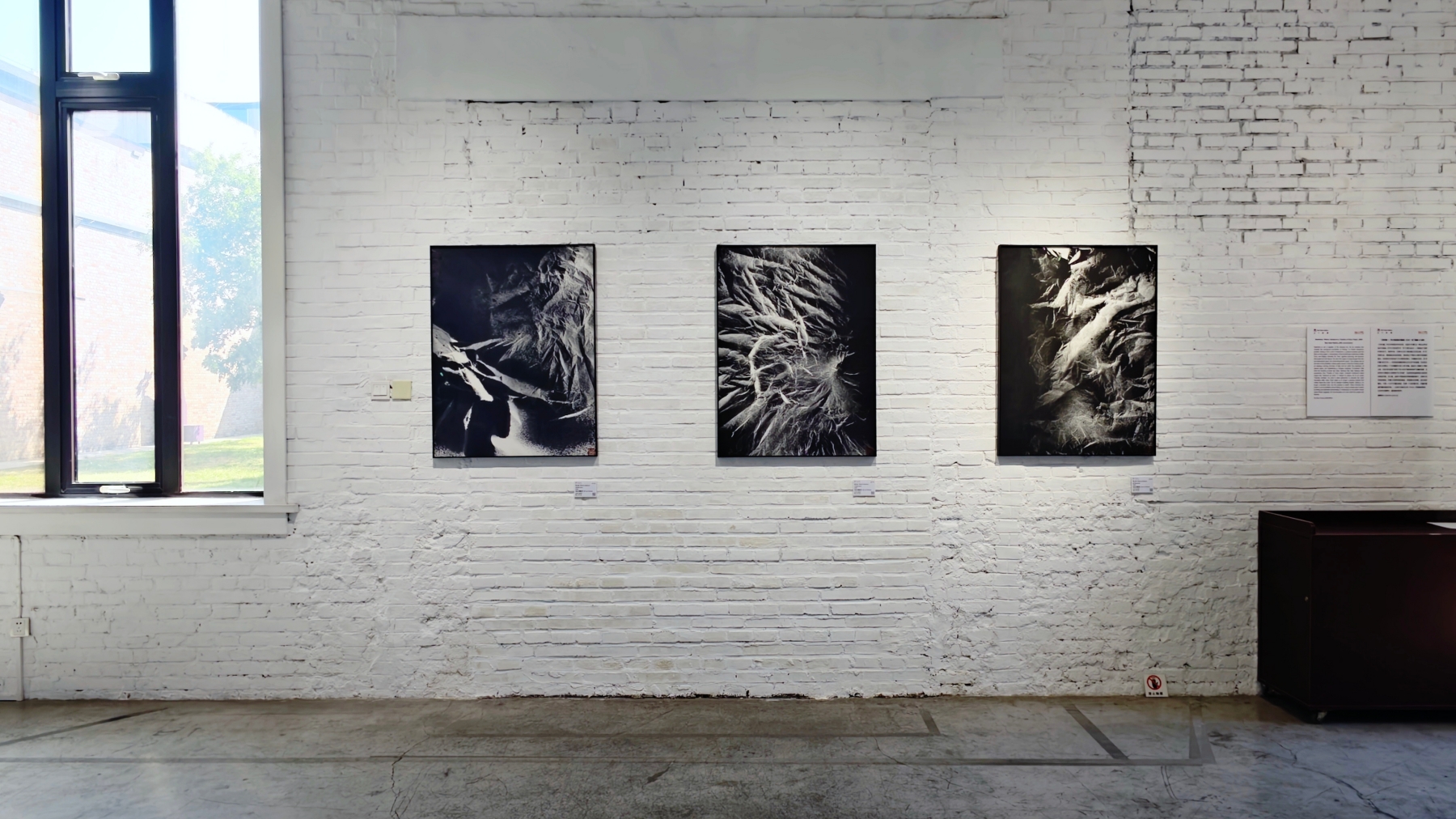
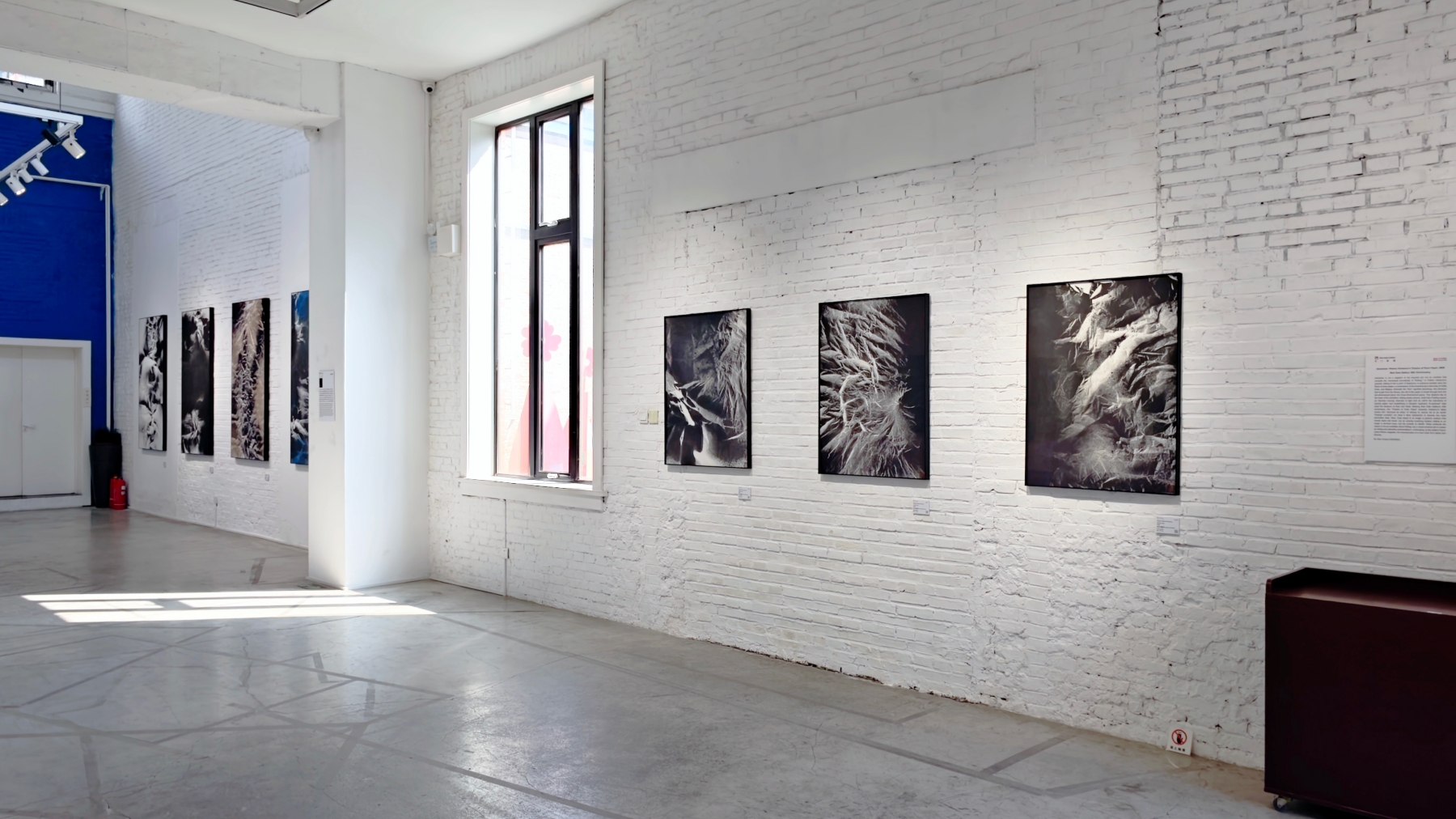
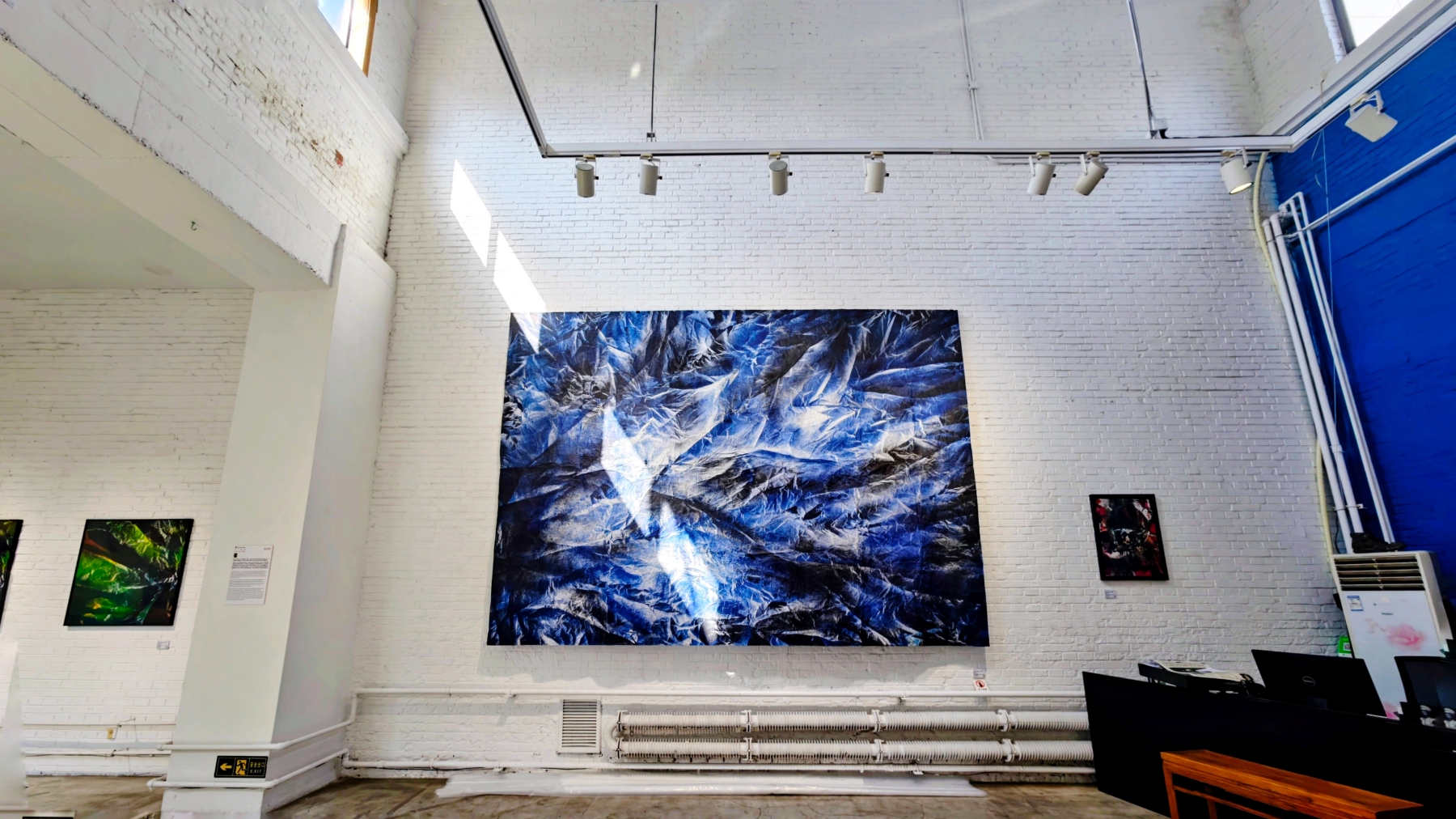
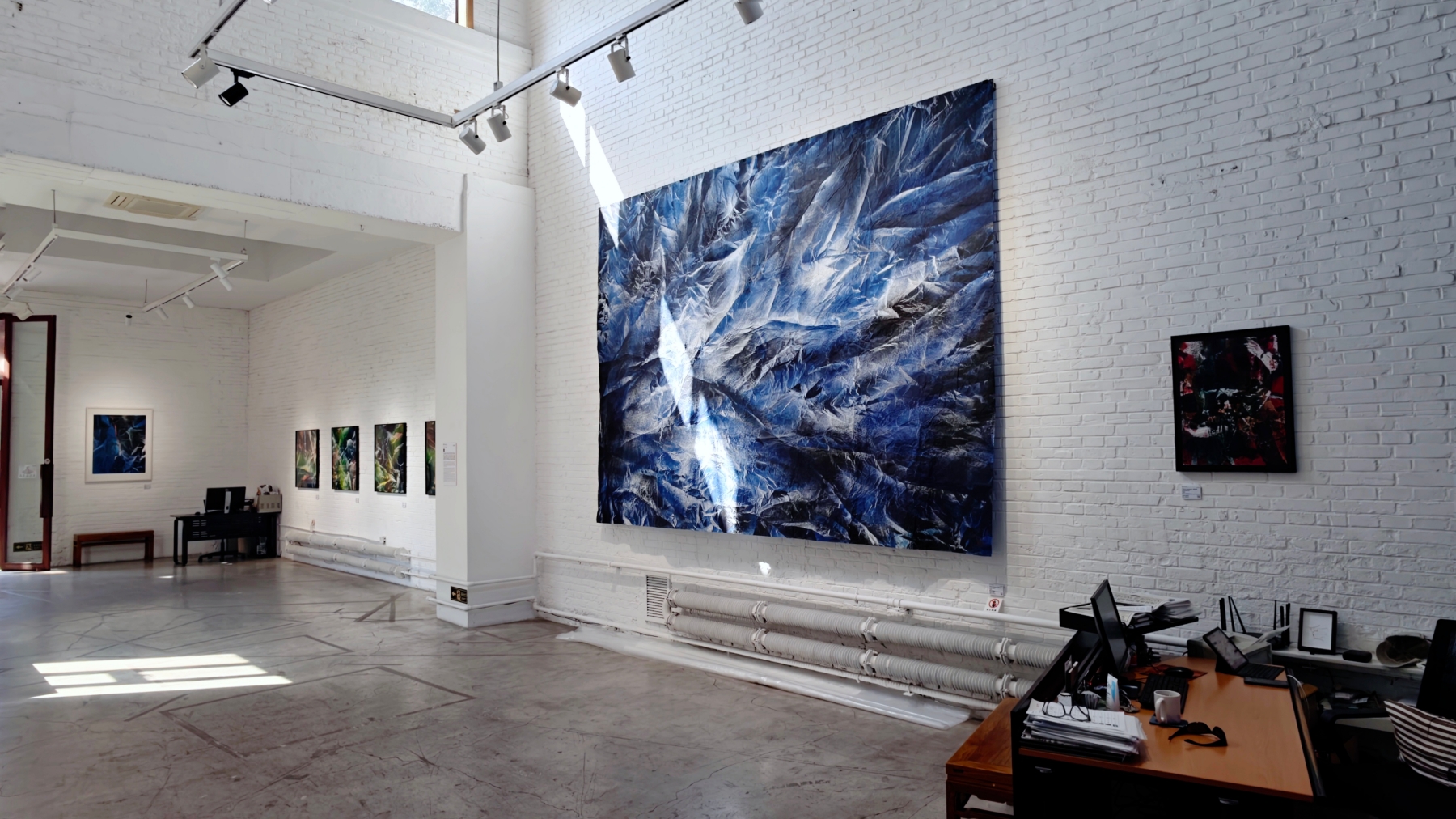
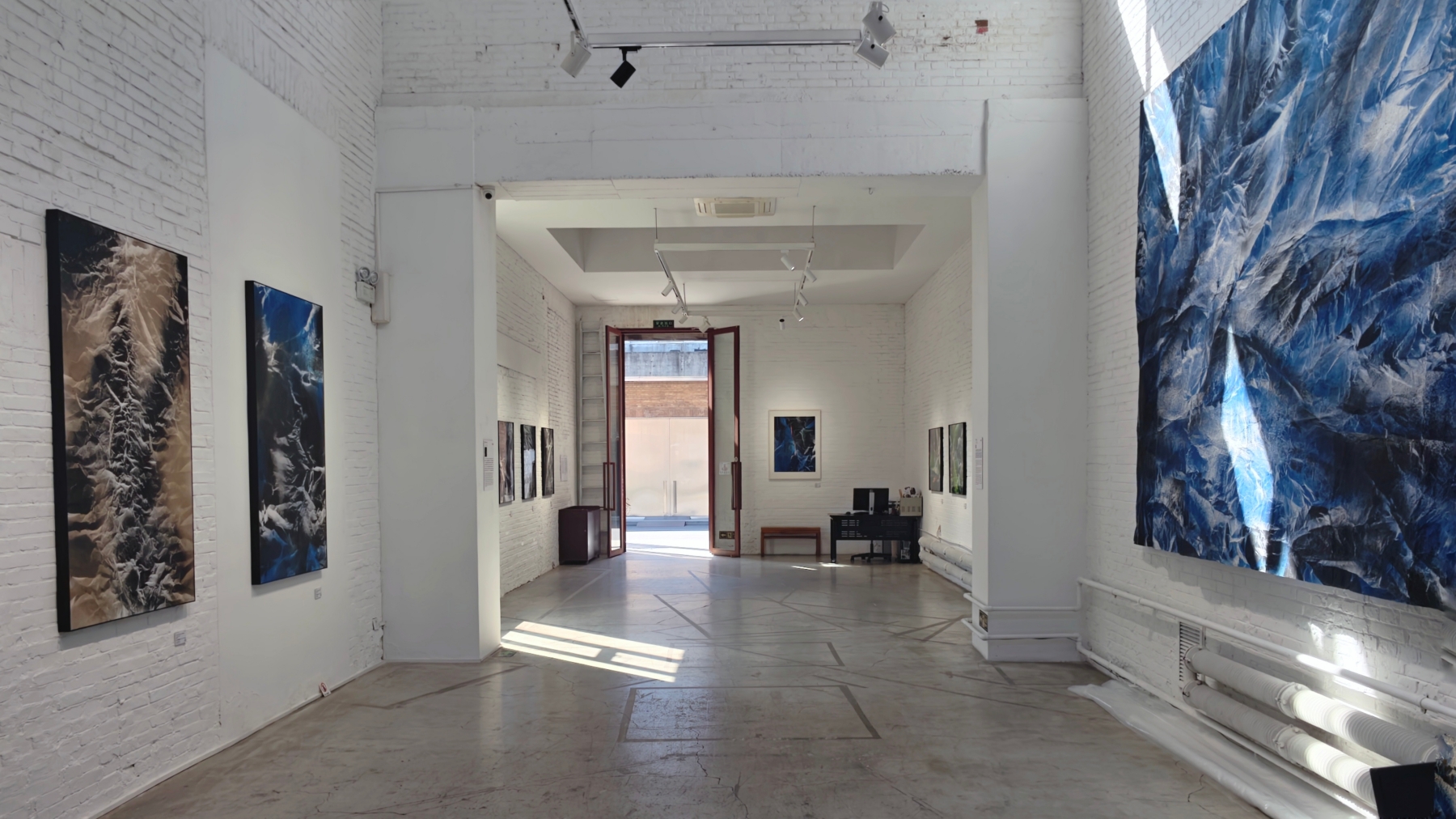
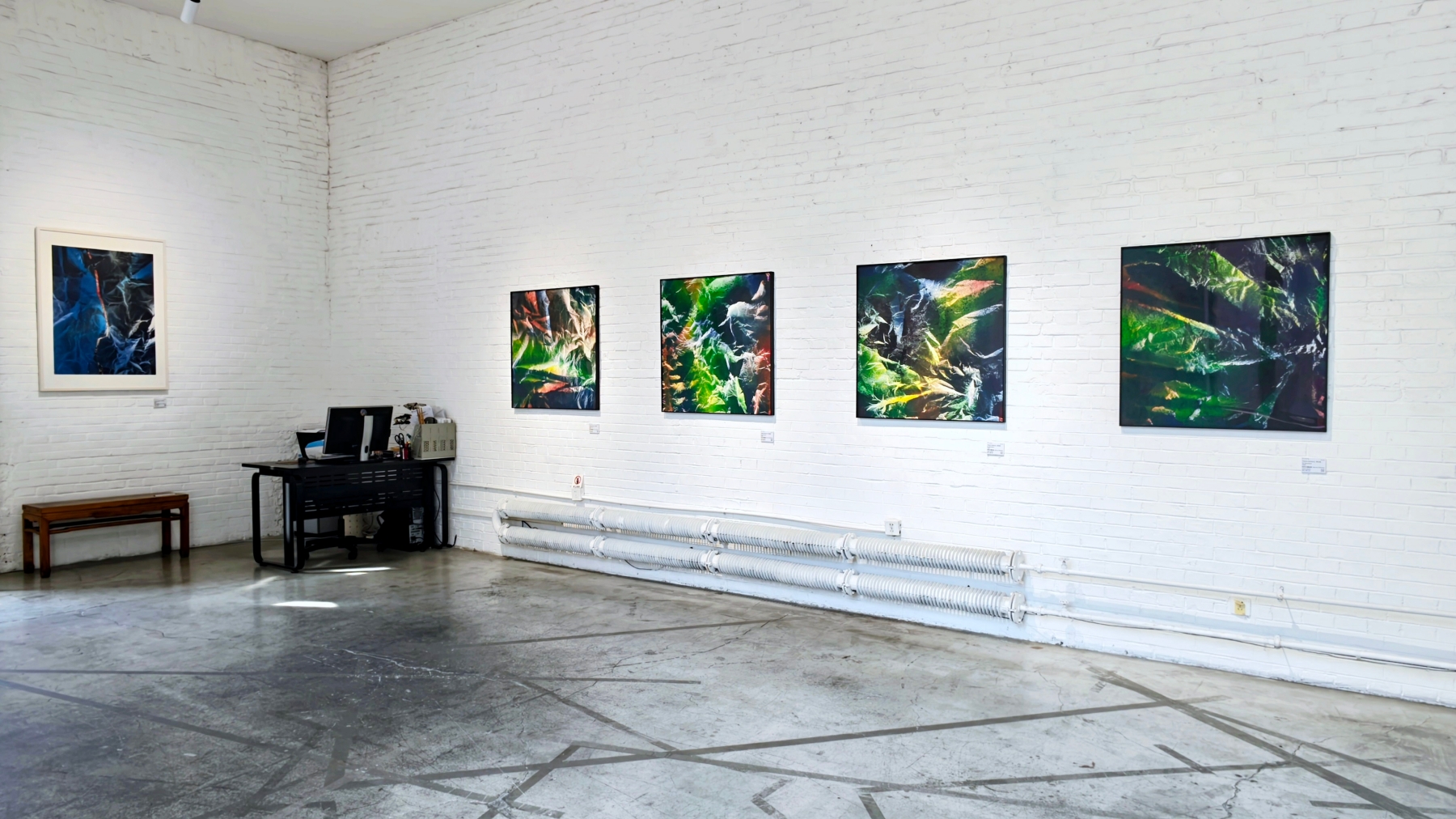
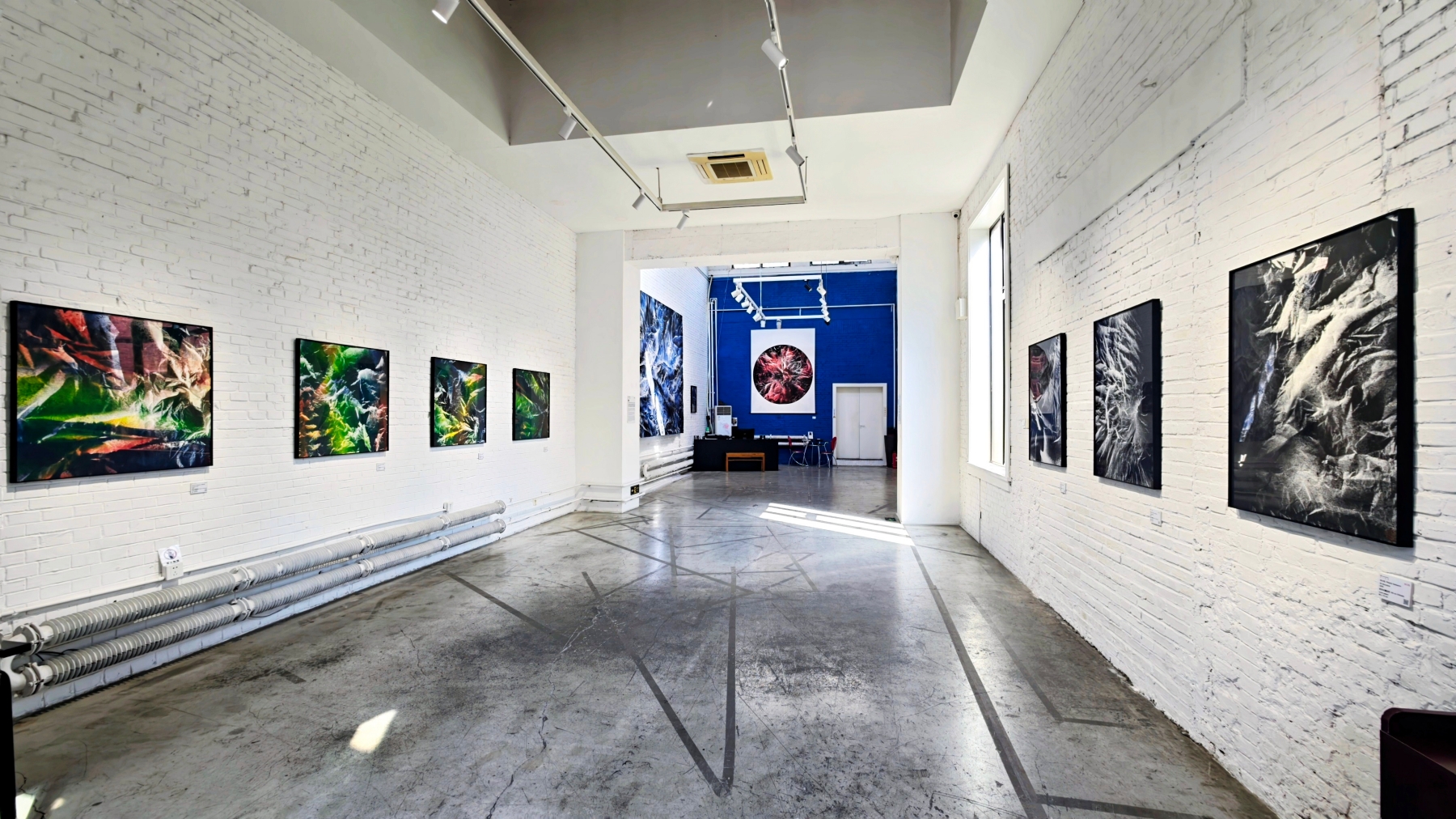
Having lived a nomadic existence for most of his life between Paris, Sofia, and Beijing, Phénix takes Xuan paper as his theatre. Through the visual tensions generated by fissure, structure, and ink, he stages a silent yet profoundly generative experiment. The recent works soon to be exhibited not only mark a significant phase in his artistic trajectory; viewed from a decentered geopolitical perspective, but they also offer a crucial occasion to reassess the artistic value and significance of his practice.
I. Stripping Away and Reconstruction: Beyond the Family Narrative
To speak of Phénix Varbanov is inevitably to encounter a legendary family that almost defined a crucial chapter in the history of Chinese avant-garde art and early Sino-Western exchange. His father, Maryn Varbanov, was a Bulgarian pioneer of fiber art who introduced “soft sculpture” and modern spatial art into China, reshaping the terrain of contemporary art. His mother, Song Huaigui, was a cultural icon who catalyzed China’s transformation toward modernity and its early fashion awakening.
For any curator or writer, such a lineage offers a powerful narrative temptation. Yet to become overly absorbed in this biographical legend is also to risk obscuring Phénix’s core identity as an independent artist.
What is distinctive about Phénix is precisely his active refusal of the symbolic convenience naturally bestowed by genealogy. In his compositions, he neither accumulates clichés of “Chinese ink symbols” designed to cater to the Western gaze, nor does he mechanically appropriate established formats of European abstraction. Instead, he translates the existential experience of multiple cultural compressions and geographical dislocations into the internal topological relations of his work.
Here, identity is no longer a label affixed to the surface of the work, but an invisible emotional pressure; culture is no longer a decorative backdrop, but the deep aesthetic structure of the work itself. In his hands, Xuan paper is no longer a passive plane docilely bearing brush and ink; it becomes an active, living organism—folded, kneaded, and rewoven. The traces left upon the paper resemble “spiritual folds,” marks produced after history and memory have repeatedly shaped themselves through the material medium.
II. The Rhetoric of the Fissure: The Fold as Becoming
Upon entering Phénix’s visual world, what first strikes the senses are the omnipresent fissures.
They cut across, spread, and intersect on the picture plane like fault lines left by tectonic movement; they resemble the dangerous, delicate cracks that appear as glaciers melt; at times, they even evoke a texture reminiscent of the secret pulsations within the flesh. Within the discourse of Western modernism, the fissure is often bound to trauma or fragmentation. Yet in Phénix’s aesthetic dialectic, the fissure reveals a vitality closer to Eastern philosophy: it is not the endpoint of destruction, but the catalyst for “becoming.”
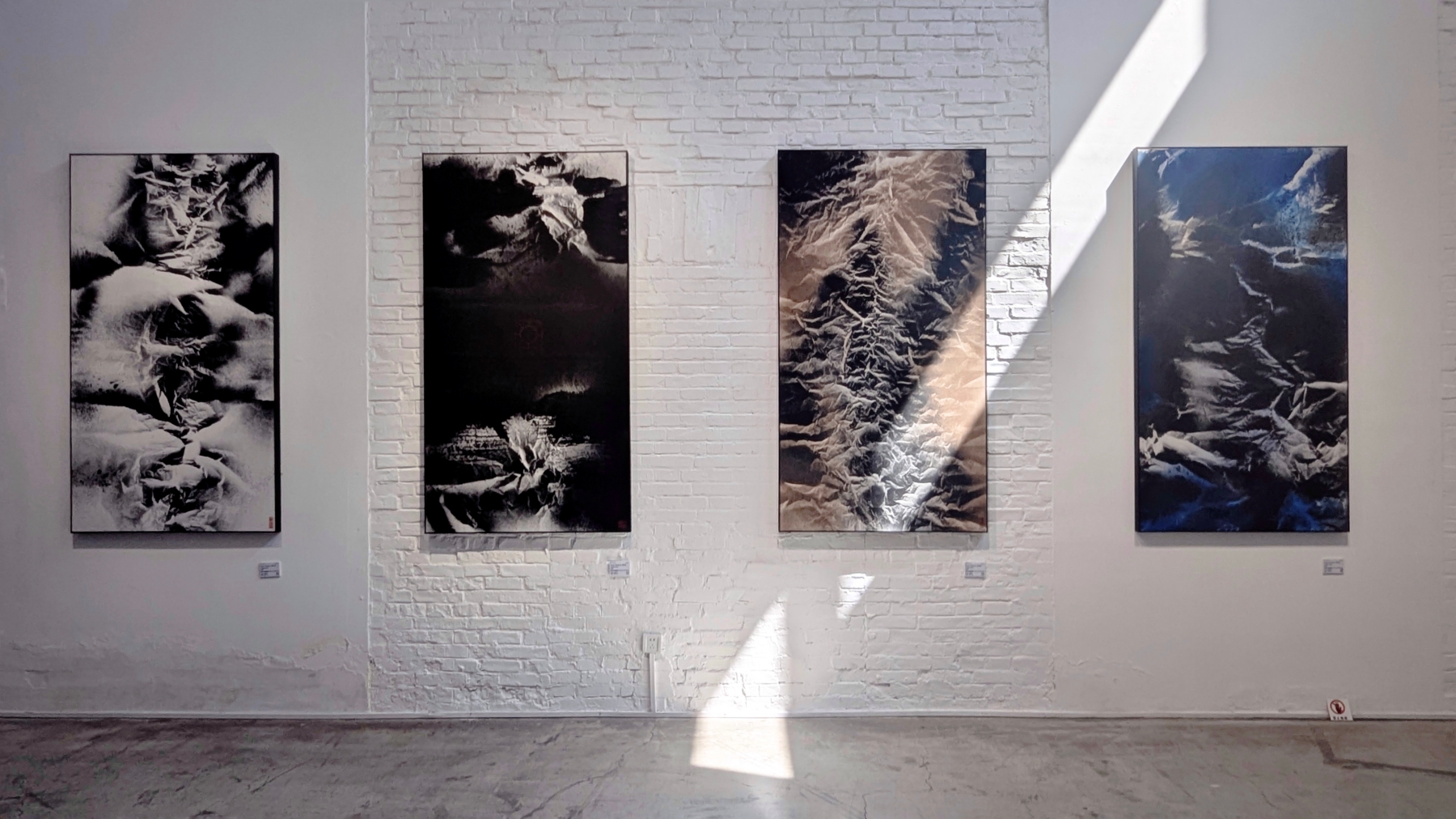
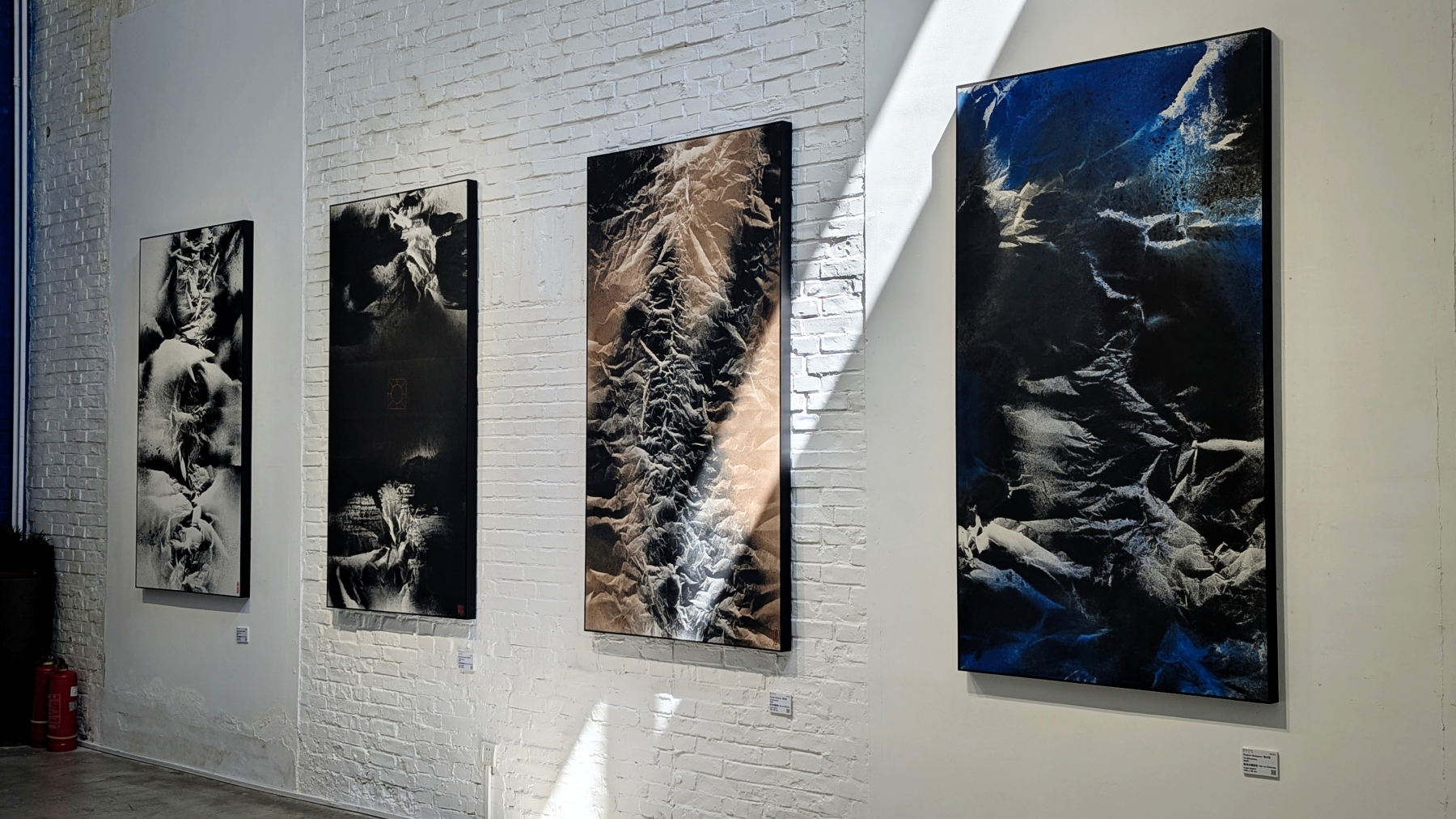
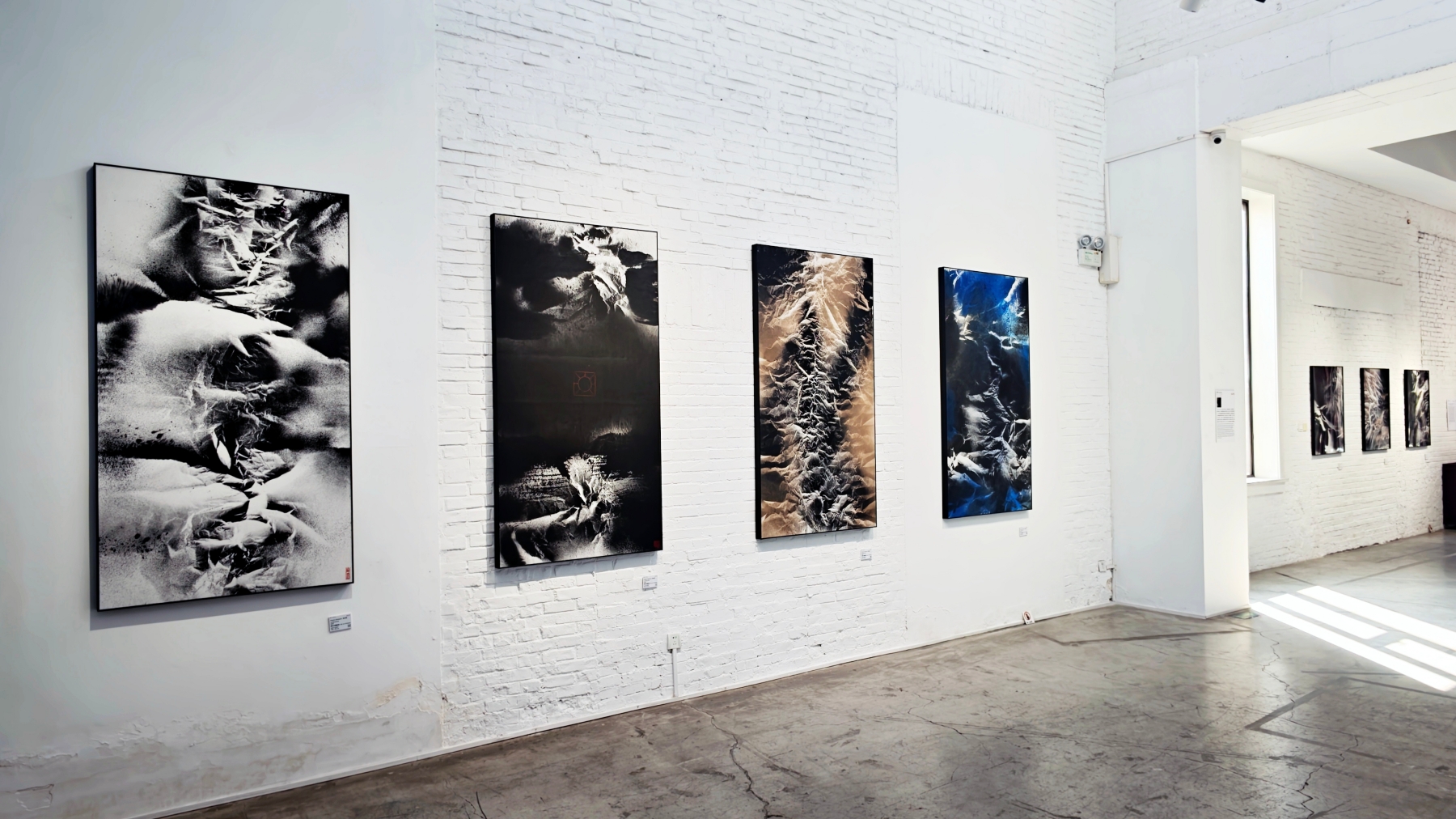
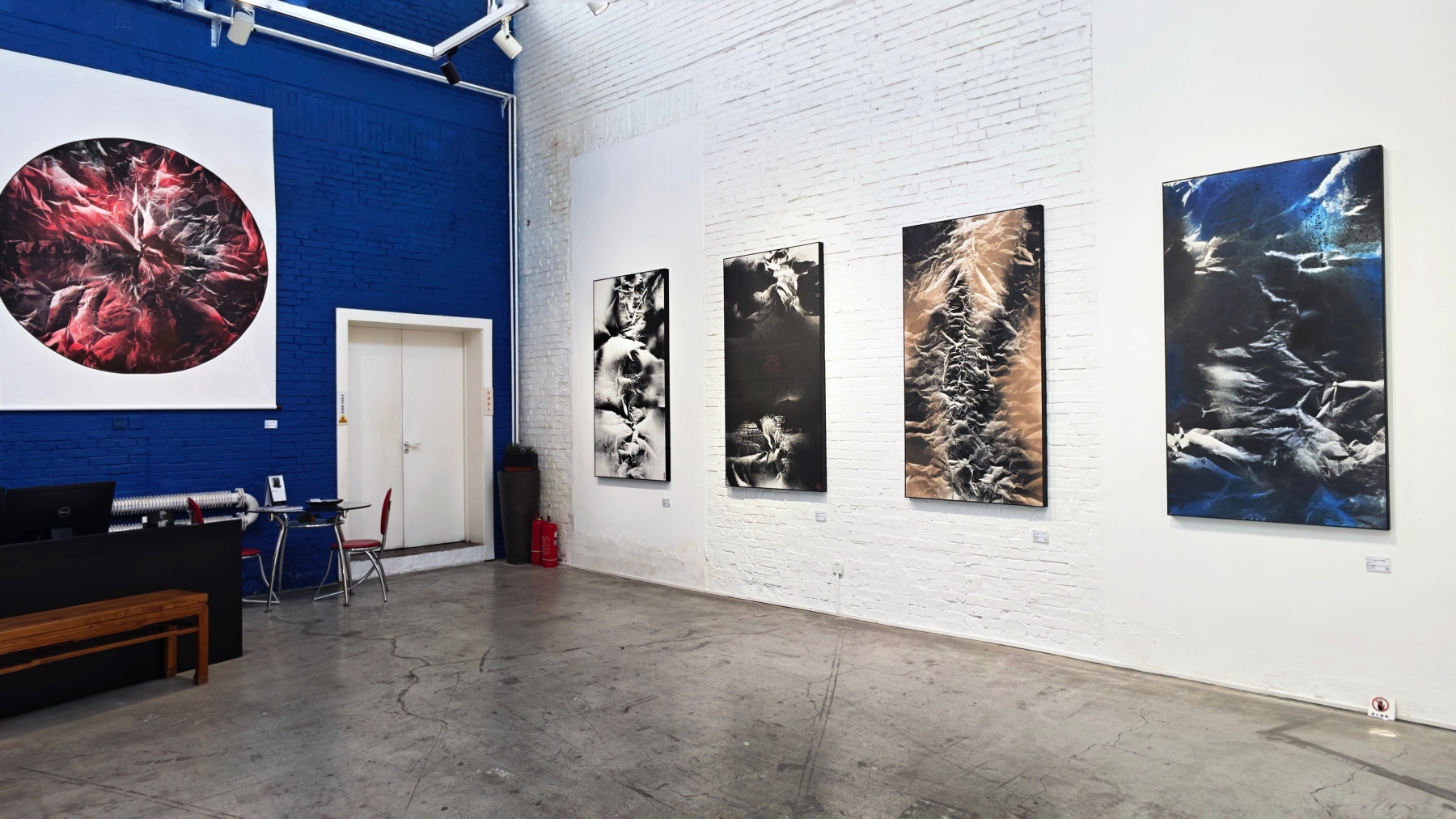
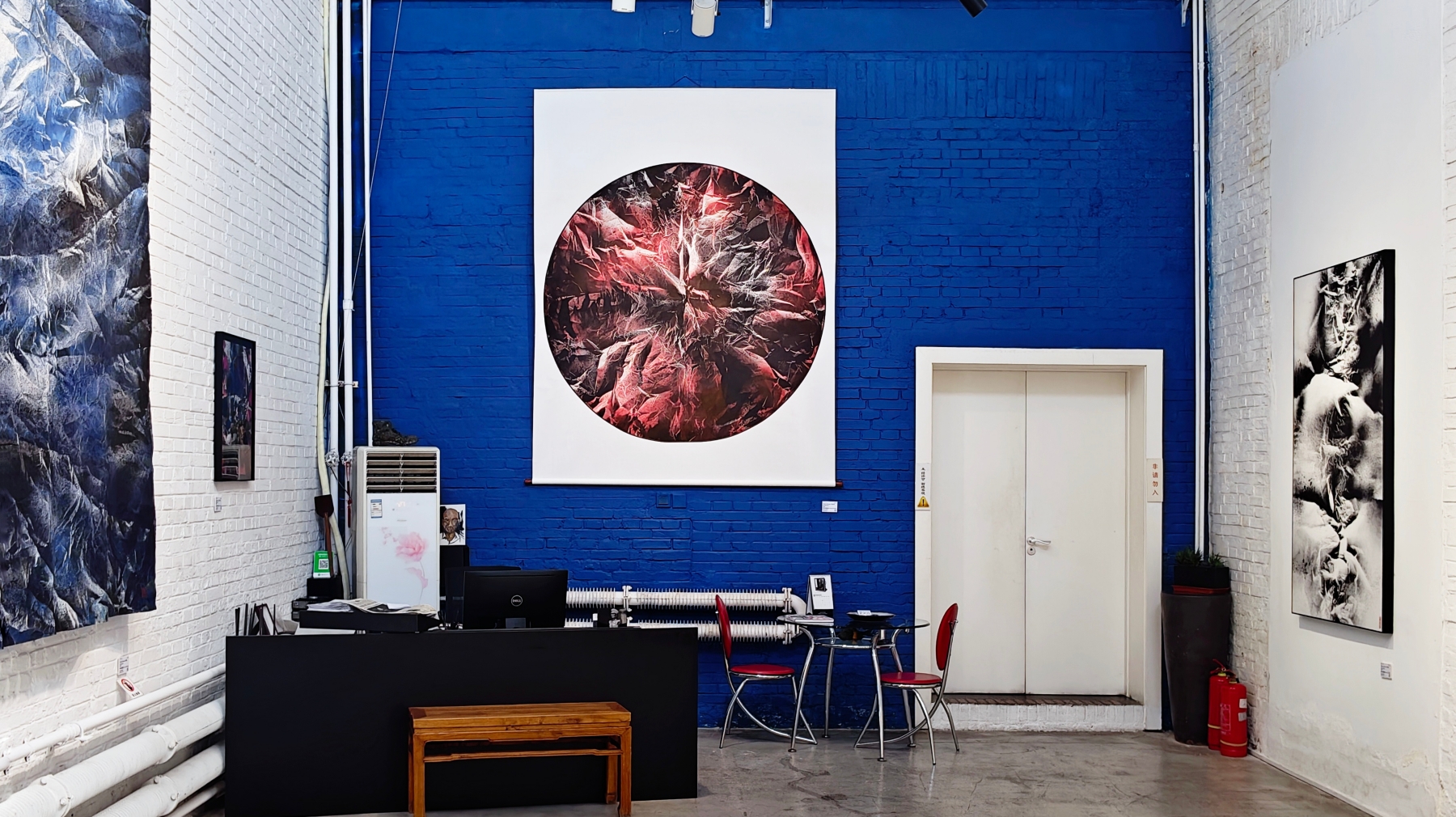
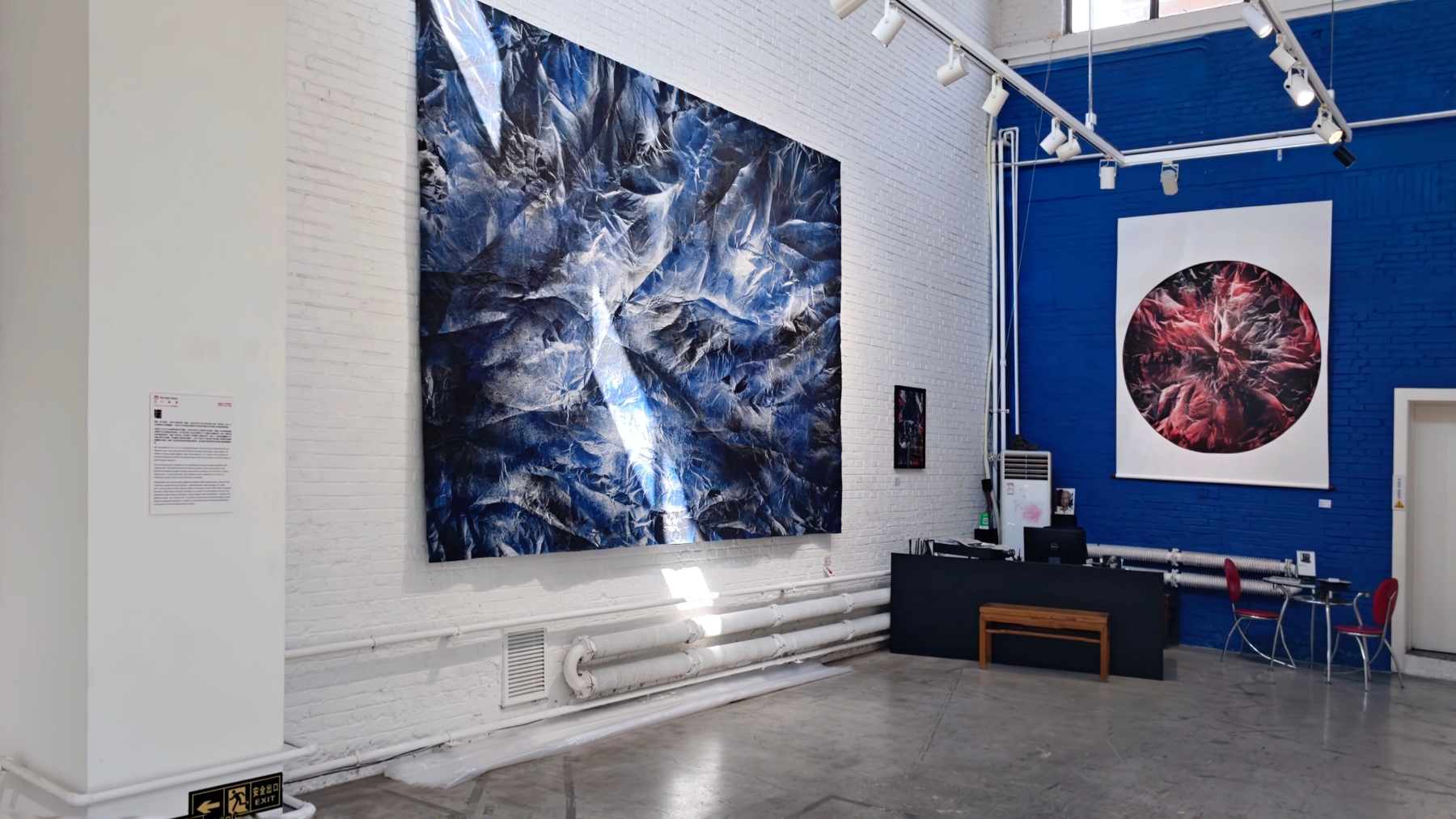
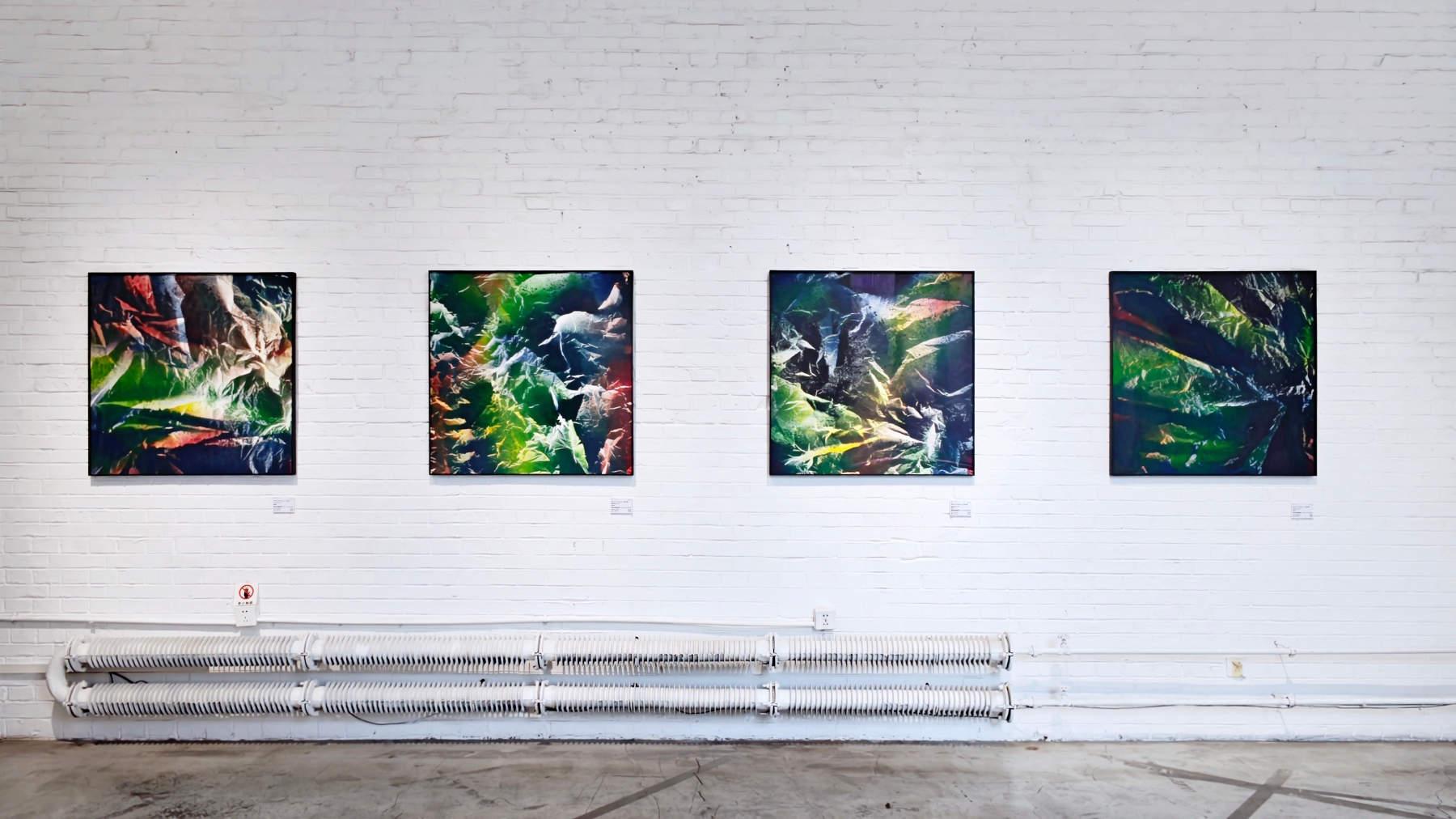
This resonates subtly with the imagery implied by his French name, Phénix—the phoenix. It is not a symbol of flawless, static beauty, but of a will that reconstitutes itself from ashes and is reborn through rupture. In these works, dense ink descends like settled coal ash; vermilion surges like magma from beneath the earth; indigo remains still, like a faint light from the depths of the cosmos. Color seeps, overflows, and finally solidifies within the fibrous fissures of Xuan paper, as though the collapse of an old order were unfolding simultaneously with the rise of a new world. The fissure is not the relic of ruin, but the mark of vitality breaking through its confines.
III. Structure as Body: The Living Space of Xuan Paper
Following the fissures deeper into the work’s texture, one encounters the methodological core of Phénix’s art: structure.
One of his central bodies of work is explicitly titled Structures. The title itself reveals a constructivist ambition: the artist’s task is no longer to “depict” a pre-existing world, but to reorganize its internal configuration.
In these works, figurative representation has been thoroughly filtered out. Phénix does not depict specific mountain peaks; he presents instead the state of tectonic pressure, the movement through which mountains rise. He does not depict the vastness of the starry sky; he captures the energetic trajectories of celestial bodies. He does not directly paint the flesh, yet he precisely conveys the emotional transformation of a body under pressure, folded, compressed, and reconstituted.
This methodology completely distinguishes Phénix from traditional ink or paper-based artists. In the contemporary context, Xuan paper is no longer a passive medium for carrying concepts; it becomes a “body” endowed with warmth and breath. Through embossing, staining, kneading, tearing, reconstruction, and collage, Phénix transforms the two-dimensional paper surface into a spatial field situated between painting, relief, and three-dimensional visuality. When viewers stand before these works, what they experience is not the rapid consumption of an image, but a living space forcibly opened, breathing inward.
For a long time, Chinese ink has faced a double misreading on the international art stage: it has either been fixed as an exoticized national heritage or consumed as a decorative style associated with Eastern Zen. Phénix’s practice offers a third path beyond this binary.
He possesses a profound understanding of the underlying genetic code of Chinese ink art: the breath of Xuan paper, the subtle gradations of “the five tones of ink,” and the shifting resonance of qiyun (spirit resonance). These elements have long been absorbed into the instinctual foundation of his practice. Yet he decisively abandons the codified brushwork of literati painting and the conventionalized imagery of landscape.
What he preserves is the qi and dynamic force (shi) of ink, rather than any representational form.
In his compositions, ink is no longer gently “written” upon the surface of the paper; it is reorganized through folding, pressing, striking, and tearing. Within this labor of physical force and material confrontation, one can perceive both the precise control of void, substance, and qiyun in Chinese aesthetics, and the intensity of physical action associated with Western Abstract Expressionism. Ink is placed within the structural tension of modernity: negotiating conflict and achieving coexistence through rupture.
Within this “coexistence,” ink fully escapes the visual-perceptual limitations of the flat surface and gains an almost sculptural spatial dimension. Phénix allows ink to cease being merely a “trace” attached to paper; instead, it becomes an “event” produced by the combined action of paper fiber, water, gravity, and action. As Xuan paper undergoes kneading and reconstruction, ink settles and accumulates within overlapping folds and deep ruptures, generating undulations and shadows like miniature terrains. Ink here is no longer an elegant literati “ink play” (moxi), but a material presence endowed with weight, speed, and optical illusion.
This is Phénix’s fundamental activation of ink. He removes the heavy historical burden of the literati tradition while preserving the sinews of Eastern spirit; he absorbs the gestural tension of Western modernity while refusing the rootless imitation of abstract art. Through the deconstruction and reorganization of ink’s internal genetic structure, he not only opens a new field beyond the boundaries of tradition, but also allows this ancient medium to re-establish, within the contemporary visual field, a modern language endowed with both historical depth and contemporary spiritual temperament.
IV. Traces of Transit: Nomadism, Memory, and Nonlinear Sedimentation
Running parallel to his exploration of spatial mechanics is another important series: Traces of Transit. This body of work concerns the measurement of time, as well as individual migration within the conditions of globalization.
Phénix’s own life trajectory is itself a vast history of nomadism: childhood in Sofia, upbringing and education in Paris, followed by long periods of movement between Beijing and the Eurasian continent. Yet he does not treat these experiences as autobiographical lyricism. Instead, he abstracts them into a system of traces on paper: layered folds become the indices of time; diffused ink marks become evidence of transit; tears in the paper suggest the fractures of memory.
To fully decode this system, one must place it within the spiritual triangle formed by Paris, Sofia, and Beijing. Paris gave him the modernist edge and methodology, enabling his experiments to move beyond regional limits. Sofia brought the historical echoes and tragic fatalism of Eastern European upheavals; as the homeland of his father, Maryn Varbanov, it gave the fissures in his work a heavier historical dimension. Beijing, meanwhile, remains an unseverable cultural matrix, carrying, within his subconscious, the deep resonance of the golden age of Chinese avant-garde art embodied by his mother, Song Huaigui.
This geographic movement is not a one-way narrative of “going global,” but a continuously looping and self-proliferating trajectory. He begins from Sofia, completes a process of cultural grafting and linguistic acquisition in Paris, confronts the heavy echoes of family and history upon returning to Sofia, and finally arrives in Beijing with a visual grammar forged abroad—Beijing being the true spiritual and cultural point of origin of his artistic life, opened by Song Huaigui.
V. Conclusion: Regaining Freedom in the “In-Between”
It is precisely on the basis of this complex triangle of Beijing, Paris, and Sofia that Phénix offers a paradigm beyond narrow identity politics. He refuses to turn ink into an Orientalist object of spectacle for Western consumption. Instead, through a decentered act of reconstruction, he transforms it into a universal language concerned with how to rebuild connections in a fractured world.
This is where the penetrating force of his work lies: it dismantles cultural barriers. What viewers encounter before these works is no longer a specific form of Eastern exoticism, but one of the most fundamental experiences of human existence—seeking a crevice under pressure, and constructing order at the site of rupture.
Phénix’s art has always remained suspended in a state of the in-between: between East and West, between tradition and the contemporary. Yet this “in-between” is by no means an eclectic compromise. It is a center charged with tension and explosive force. Here, Xuan paper is folded into the flesh of the world; ink becomes an undercurrent that activates bodily experience; the fissure is transformed into a conduit through which a new order comes into being.
In September 2026, when we stand before this recent body of work at Red Gate Gallery in Beijing’s 798 Art District, what we will encounter is not merely an exhibition, but a visual universe—built from fissure, structure, and ink—that is still vigorously in a state of vibrant becoming.
Written at Tsinghua University, June 24, 2026
折叠、撕裂与重生:宋小松的宣纸剧场
文/萧煌 Xiao Huang
在当下的全球当代艺术叙述中,“跨文化”已然成为一个过度消耗而逐渐失效的标签。当迁徙、碰撞与多重身份成为日常,流于表面的“文化拼贴”往往显得轻飘。真正能在展厅空间中留下精神余震的,永远是那些能将庞杂的个体历史、地缘纠葛与语言张力,决绝地内化为作品内在结构的创作者。
宋小松的实践,正是在这一维度上展开的。
这位在巴黎、索菲亚与北京之间游牧了大半生的艺术家,以宣纸为剧场,通过裂痕、结构与水墨构筑的视觉张力,进行着一场静默却极具创造力的实验。即将展出的这批近作不仅记录了他创作生涯的阶段轨迹,更在去中心化的地缘视野下,成为我们重新评估其艺术价值的关键契机。
一、 剥离与重构:超越家族叙事
谈论宋小松,总绕不开那个几乎定义了中国前卫艺术与早期中西交流史的传奇家庭:父亲万曼是将“软雕塑”与现代空间艺术引入中国、改写当代艺术地貌的保加利亚纤维艺术先驱;母亲宋怀桂则是开启中国现代性转型与时尚启蒙的文化偶像。
对任何策展人或写作者而言,这样的家族谱系都极具叙事诱惑。然而,过分沉溺于这种传记式的传奇,往往会遮蔽宋小松作为独立艺术家的核心面貌。
宋小松的独特之处,恰恰在于他主动剥离了血缘天然附带的符号便利。在画面中,他既不堆砌迎合西方凝视的“中国水墨符号”,也不生硬挪用欧洲传统抽象的既成格式。相反,他将多重文化挤压与地理错位带来的生存经验,转化为了作品内部的拓扑关系。
在这里,身份不再是可以贴在作品外表的标签,而是一种无形的情感压力;文化也不再是背景幕布,而是作品深层的审美结构。他笔下的宣纸,不再是安分承受笔墨的平面,而是被折叠、揉搓并重新编织的活性机体。那些留在纸上的痕迹,恰似历史与记忆在物质媒介上反复塑形后留下的“精神褶皱”。
二、 裂痕的修辞:作为生成的褶皱
进入宋小松的视觉世界,最先撞击感官的是那些无处不在的“裂痕”。
它们横截、蔓延、交错在画面上,如同地壳运动后留下的断层,亦如冰川消融时危险而细密的缝隙,甚至呈现出某种让人联想到肉体内部隐秘搏动的肌理。在西方现代主义的话语体系中,裂痕常与“创伤”或“破碎”绑定;但在宋小松的美学辩证中,裂痕展现出一种东方哲学式的生命力——它不是毁灭的终点,而是“生成”的契机。
这微妙地契合了他的法文名字“Phénix”(凤凰)所隐含的意象:那并非某种无瑕而静止的美,而是在灰烬中重组、在裂变中新生的意志。在那些作品中,浓墨如沉降的煤烬,朱砂如地底涌动的岩浆,靛蓝沉静如宇宙深处的微光。色彩在宣纸的纤维裂缝间渗透、漫溢并最终凝固,宛如一个旧秩序的塌陷正伴随着新世界的勃兴。裂痕并非废墟的遗迹,而是生命力突围的印记。
三、 结构即身体:宣纸的生命空间
沿着裂痕深入作品的肌理,便会遭遇到宋小松艺术的方法论核心:“结构”。
他的核心创作系列直接被命名为《结构》。这一命名本身就透露出一种建构式的野心:艺术家的工作不再是“描绘”既定世界,而是在重组它的内在构造。
在这些作品中,具象的再现被彻底过滤。他不去描画具体的峰峦,而是呈现地壳挤压、山脉隆起的运动状态;他不描绘浩瀚星空,而是捕捉天体运行的能量轨迹;他甚至不直接画肉身,却精准传递出身体在承受重压、折叠与重构时的情绪变化。
这种工作方式,我们需将宋小松同传统意义上的水墨或纸本艺术家彻底区分开来。在当代语境下,宣纸不再是承载观念的被动媒介,而是一个有温度、有呼吸的“身体”。宋小松通过压印、浸染、搓揉与撕扯、重组与拼贴,将二维的纸面转化为介于绘画、浮雕与三维视象之间的立体场域。当观众直面这些作品时,感受到的绝非图像的快餐式消费,而是一个被强行打开的、向内呼吸的生命空间。
长期以来,中国水墨在国际艺术舞台上往往面临双重误读:要么被固化为带有猎奇色彩的民族遗产,要么被消费为带有东方禅意的装饰风格。宋小松的实践,则提供了一条跳脱二元对立的第三条道路。
他深谙中国水墨艺术的底层基因——宣纸的呼吸、墨分五彩的微妙层次、虚实相生的气韵变化,这些早已作为生命本能融汇在他的创作底蕴中。但他决绝地摒弃了文人画的笔墨程式与套路化的山水图式。
他保留的是水墨的“气”与“势”,而非任何具象的“形”。
在他的画面中,墨色不再被温和地“写”在纸面上,而是伴随折叠、压入、撞击与撕开被重新组织出来。在这种极具身体感和物质对抗的劳作中,我们既能读出中国美学对虚实气韵的精准控制,又能感受到西方抽象表现主义中身体行动的强度。水墨被置于现代性的结构张力之中,在冲突中妥协,在撕裂中实现共生。
在这种“共生”中,水墨彻底脱离了平面的视知觉限制,获得了一种雕塑般的空间维度。宋小松让水墨不再只是附着于纸面的“痕迹”,而是转变为由纸张纤维、水分、重力与行动共同作用的“事件”。当宣纸经历揉搓与重组,墨色在那些重叠的褶皱与深邃的断裂处沉降、聚积,便产生了微型地貌般的起伏与阴影。水墨在此处不再是儒雅的墨戏,而是一种具有重量、速度与视错觉的物质存在。
这正是宋小松对水墨的本质激活:他卸下了文人传统沉重的历史包袱,却保留了东方精神的筋骨;他吸纳了西方现代性的行动张力,却拒绝了无根的抽象模仿。通过对水墨基因的解构与重组,他不仅在传统边界之外开辟了新的视界,更让水墨这一古老的媒介,在当代的视觉现场中,重新确立起一种兼具历史厚度与当下精神器质的现代语言。
四、 路行轨迹:游牧、记忆与非线性沉积
与对空间力学的探索并行,是宋小松的另一个重要序列——《路行轨迹》。这组作品关乎时间的度量,也关乎全球化语境下的个体迁徙。
宋小松本人的生命轨迹就是一部宏大的游牧史:索菲亚的童年,巴黎的成长与求学,以及此后在北京与欧亚大陆之间漫长的往返与穿梭。但他并未将这些经历处理成自传式的抒情,而是将其高度抽象为纸面上的痕迹系统:重重折痕是时间的刻度,晕染的墨迹是行走的证据,纸张的撕裂隐喻着记忆的断层。
要完整解码这一系统,必须将其置于巴黎、索菲亚与北京构成的精神三角之中。巴黎赋予了他现代主义的锋利与方法论,使他的实验跳脱出地域限制;索菲亚带来了东欧剧变的历史回声与宿命感,作为父亲万曼的故乡,这里让作品中的“裂痕”有了沉重的历史维度;而北京,则是无法割舍的文化母体,承载着母亲宋怀桂所代表的中国前卫艺术黄金期在意识深处的共振。
这种地理位移并非单向的“走向世界”,而是一个不断循环、自我增殖的轨迹。他从索菲亚出发,在巴黎完成了文化的嫁接与语言的习得,在重返索菲亚时面对了家族与历史的沉重回声,最终带着这套在异乡锤炼成熟的视觉语法,抵达了北京——这个由母亲宋怀桂所开启的、他艺术生命真正的精神文化起点。
五、 结语:在“之间”重获自由
正是基于北京、巴黎与索菲亚构成的复杂三角,宋小松提供了一个超越狭隘身份政治的样本。他拒绝将水墨制成兜售给西方的“异域奇观”,而是通过一种去中心化的重构,将其转化为一种关于如何在世界分离中重建连接的普遍语言。
这种穿透力,瓦解了文化的藩篱。观众在画前感受到的,不再是某种特定的东方风情,而是人类最为本质的生存体验——在重压之下寻找缝隙,在断裂之处构筑秩序。
宋小松的艺术,始终悬置于一种“之间”的状态:在东方与西方之间,在传统与当代之间。然而,这种“之间”绝非折衷式的中庸,而是一个充满拉扯与爆发力的中心。在这里,宣纸被折叠为世界的肉身,水墨成为激活身体经验的暗流,裂痕则化作新秩序诞生的通道。
2026年9月,当我们在北京798红门画廊直面这批近作,我们将看到的不仅是一个展览,而是一个由裂痕、结构与水墨共同筑起的、正在蓬勃生成的视觉宇宙。
2026.6.24于清华园
Related Exhibition 相关展览

Seamless: Phénix Varbanov’s Theatre of Xuan Paper
非折叠——宋小松的纸本剧场
September 5 – October 4, 2026
2026年9月5日至10月4日